Magnesium, Vitamin D and K2: The Nutritional Trio Your Bones Have Been Waiting For

Why Magnesium, Vitamin D, and K2 Work Better Together
If you've been taking vitamin D supplements and wondering why you're not feeling the full benefit, there's a good chance your body is missing two critical co-players: magnesium and vitamin K2. These three nutrients form one of the most powerful nutritional synergies in the human body — a trio that works together to regulate calcium, support bone density, protect your cardiovascular system, and keep your immune function strong.
In South Africa, where winter months (June through August) bring reduced sun exposure and many people find themselves reaching for vitamin D supplements, understanding this synergy becomes especially important. Taking vitamin D in isolation, without adequate magnesium and K2, may not only limit its effectiveness — it could also create imbalances that affect your long-term health.
This post unpacks the science behind this remarkable nutritional trio, explains how each nutrient supports the others, and offers practical guidance on how to bring them into your daily wellness routine.
The Calcium Problem: Why Direction Matters
At the heart of this synergy is calcium — a mineral your body needs in abundance, but one that must be carefully directed. Calcium absorbed into the bloodstream needs to end up in your bones and teeth, not in your arteries, kidneys, or soft tissues. When calcium is poorly directed, it can contribute to arterial stiffness, kidney stones, and calcification of soft tissue.
This is where the trio becomes essential. Each nutrient plays a distinct role in the calcium management system:
- Vitamin D acts as the gatekeeper — it dramatically increases calcium absorption from the gut. Without sufficient vitamin D, you may absorb as little as 10–15% of dietary calcium. With adequate levels, absorption rises to 30–40% or more.
- Vitamin K2 acts as the traffic director — it activates two critical proteins: osteocalcin (which binds calcium into bone tissue) and Matrix GLA Protein or MGP (which prevents calcium from depositing in arteries and soft tissues).
- Magnesium acts as the engine — it is a required cofactor for the enzymes that convert vitamin D into its active form in the liver and kidneys. Without magnesium, vitamin D cannot be properly metabolised, regardless of how much you take.
Together, they create a complete calcium regulation system. Separately, each one is limited in what it can achieve.
The Science: What Research Tells Us
Magnesium and Vitamin D: A Dependency You Can't Ignore
A landmark review published in The Journal of the American Osteopathic Association (2018) found that magnesium is essential for the metabolism of vitamin D, and that magnesium deficiency can render vitamin D supplementation largely ineffective. The researchers noted that the enzymes responsible for converting vitamin D into its active form — 25-hydroxyvitamin D and then 1,25-dihydroxyvitamin D — are all magnesium-dependent.
A clinical study published in The American Journal of Clinical Nutrition further demonstrated that magnesium supplementation can raise vitamin D levels in individuals who are deficient, while helping to regulate levels in those who are already high — suggesting a homeostatic, balancing role rather than a simple additive one. This is particularly relevant for people who supplement with vitamin D but see little improvement in their blood levels.
Research from the Osteopathic Research Center has also highlighted that individuals with optimal magnesium levels may require significantly lower doses of vitamin D to achieve adequate physiological levels — meaning magnesium doesn't just support vitamin D, it makes it more efficient.
Vitamin K2 and Bone Density: The Evidence Builds
A 2022 meta-analysis published in Frontiers in Public Health, reviewing 16 randomised controlled trials involving over 6,400 participants, concluded that vitamin K2 supplementation significantly improves lumbar spine bone mineral density (BMD). The analysis also found a significant reduction in fracture risk when vitamin K2 was included in supplementation protocols.
A 2025 systematic review published in Frontiers in Endocrinology, examining nine RCTs with 2,570 postmenopausal women, found that vitamin K2 supplementation significantly increases total osteocalcin and bone-specific alkaline phosphatase — both markers of healthy bone formation — while reducing undercarboxylated osteocalcin, the inactive form that cannot bind calcium effectively.
The MK-7 form of vitamin K2 (menaquinone-7) is particularly well-studied for its high bioavailability and longer half-life in the body, making it the preferred form for sustained bone and cardiovascular support.
The Combined Trio: Greater Than the Sum of Its Parts
A systematic review and meta-analysis published on ResearchGate (2024) specifically examined the combined effects of high-dose vitamin D3, K2, and magnesium on bone health outcomes. The findings confirmed mechanistic synergy in skeletal metabolism — meaning the three nutrients working together produced outcomes that none could achieve independently. Combined therapy with vitamin D3 and K2 was shown to increase lumbar spine BMD in postmenopausal women with osteoporosis more effectively than calcium supplementation alone.
Additional research in patients with type 2 diabetes found that combined vitamin D3 and K2 supplementation improved glycaemic markers, insulin resistance, and reduced undercarboxylated osteocalcin — suggesting benefits that extend well beyond bone health into metabolic function.
Signs You May Need This Nutritional Trio
Many South Africans are unknowingly deficient in one or more of these nutrients. Magnesium deficiency is particularly widespread, as modern agricultural practices have depleted soil magnesium levels, and common dietary staples are often poor sources. Vitamin D deficiency is also common, especially in winter months or among those who spend most of their time indoors.
Consider whether any of the following resonate with you:
- Muscle cramps, twitches, or restless legs — classic signs of magnesium insufficiency
- Poor sleep quality or difficulty falling asleep — magnesium plays a key role in GABA production and nervous system calm
- Fatigue and low mood in winter — often linked to declining vitamin D levels
- Brittle nails, hair loss, or slow wound healing — may indicate poor mineral status
- Joint stiffness or bone aches — can reflect inadequate calcium metabolism
- Taking vitamin D supplements but not noticing a difference — a strong indicator that magnesium or K2 may be missing from the equation
It's worth noting that these are general wellness indicators, not diagnostic criteria. If you have concerns about your nutrient status, a blood test through your healthcare provider is the most reliable way to assess your levels.
Food Sources: Building the Foundation Naturally
Before reaching for supplements, it's always worth exploring what food can offer. These three nutrients are found in a range of whole foods:
Magnesium-Rich Foods
- Dark leafy greens: spinach, Swiss chard, kale
- Nuts and seeds: pumpkin seeds, almonds, cashews
- Legumes: black beans, lentils, chickpeas
- Whole grains: brown rice, oats, quinoa
- Dark chocolate (70%+ cacao)
- Avocado and banana
Vitamin D Sources
- Sunlight exposure (15–30 minutes of midday sun on arms and legs, several times per week)
- Fatty fish: salmon, sardines, mackerel
- Egg yolks
- Fortified foods (some dairy and plant milks)
Vitamin K2 Sources
- Natto (fermented soybeans) — the richest dietary source of MK-7
- Hard and soft cheeses
- Egg yolks from pasture-raised hens
- Butter and ghee from grass-fed animals
- Fermented foods like sauerkraut and kimchi (contain smaller amounts)
The challenge is that achieving therapeutic levels of all three through diet alone can be difficult — particularly for vitamin K2 (natto is not a common food in South Africa) and vitamin D during winter months. This is where targeted supplementation can bridge the gap.
Bringing It Together: Practical Supplementation Guidance
When supplementing with this trio, a few practical principles apply:
- Take vitamin D with a fat-containing meal — it is a fat-soluble vitamin and absorbs best alongside dietary fat
- Magnesium is best taken in the evening — it supports nervous system calm and sleep quality, making it a natural fit for a bedtime routine
- Vitamin K2 is also fat-soluble — take it with your largest meal of the day
- Consistency matters more than dose — these nutrients build up over weeks and months; daily, consistent intake is more effective than sporadic high doses
- Start with food first — use supplementation to complement a nutrient-rich diet, not replace it
At Medicine Like Food, we believe in giving your body everything it needs to function at its best. Our Magnesium Herb Enriched Capsules combine bioavailable magnesium with complementary herbs to support absorption and nervous system function. For those who prefer a plant-based approach, our Magnesium Herbal formula draws on mineral-rich botanicals traditionally used to support healthy magnesium levels.
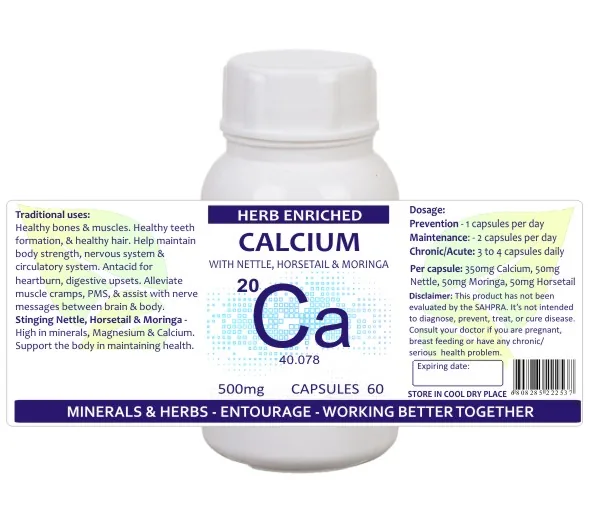
Our Vitamin K Herbal formula offers plant-sourced vitamin K support for bone health, healthy blood, and cardiovascular function — described as "power for strong bones, healthy blood, and a happy heart." For comprehensive bone mineral support, our Calcium Herb Enriched Capsules provide calcium alongside synergistic herbs to support absorption and utilisation. And for those looking to go deeper into phytonutrient-rich support, our Nutripro formula offers a broad-spectrum blend of herbs extremely high in phytonutrients — a natural foundation for overall nutritional wellness.
Safety, Interactions, and Who Should Take Care
While this nutritional trio is generally well-tolerated, there are important considerations to keep in mind:
- Kidney disease: Individuals with impaired kidney function should consult a healthcare provider before supplementing with magnesium or vitamin D, as the kidneys play a central role in regulating both nutrients.
- Blood thinners (anticoagulants): Vitamin K2 can interact with warfarin and similar medications. If you are on anticoagulant therapy, speak to your doctor before adding vitamin K2 to your routine.
- Parathyroid disorders: Conditions affecting parathyroid hormone regulation can influence how your body responds to vitamin D and calcium — professional guidance is recommended.
- High-dose vitamin D: Very high doses of vitamin D (above 4,000 IU daily) should be monitored with periodic blood tests to avoid toxicity. Always follow label guidance and consult a healthcare professional for personalised dosing.
- Pregnancy and breastfeeding: Nutritional needs change significantly during pregnancy. Consult your midwife or doctor before starting any new supplement protocol.
The information in this article is for educational purposes only and does not constitute medical advice. Always consult a qualified healthcare professional before starting any new supplement regimen, particularly if you have an existing health condition or are taking medication.
Conclusion: Complete the System
Magnesium, vitamin D, and K2 are not three separate supplements — they are three parts of one integrated system. When you take vitamin D without magnesium, you may be missing the very cofactor your body needs to activate it. When you increase calcium absorption without K2, you risk directing that calcium to the wrong places. And when you take K2 without adequate vitamin D, there's less calcium to direct in the first place.
Understanding this synergy is one of the most practical things you can do for your long-term bone health, cardiovascular wellness, and overall vitality. It's not about taking more — it's about taking the right things together, in the right way, consistently over time.
This winter, as sunlight hours shorten and vitamin D levels naturally dip, consider whether your nutritional foundation is truly complete. Explore our range of magnesium, vitamin K, and mineral-rich herbal formulas — and give your body the full support it needs to thrive through every season.
Products Mentioned
Explore the products featured in this article